

What do drowning, excommunication, coddling and being covered in shit have in common?
A word of warning. This essay contains unpalatable truths, blatant falsehoods, other people's lies and opinions best kept out of polite company. Given the subject, I feel obliged to get my excuses in early.
This is not a thesis. There will be no reference list. You'll have to trust that I've done my research. Which, for an essay about who gets to decide what is true, is rather asking for trouble.
And to answer the opening question: All four have been used to keep knowledge out of the wrong hands. Some punish those who go looking for it. Others make sure they never look in the first place. The people who decide what we may know have changed over the centuries. The punishments have become a shade more civilised. The incentives have not.
I do not share all the opinions expressed in this essay. Not all of them, not anymore.
The dubious pleasure of being immersed in water until you are dead.
I suspect and many speculative archeologists surmise that the arcane mysteries of geometry were passed down as a religion between priestly classes for thousands of years, possibly from before the time of general literacy. Geometry, the stuff of pyramid design, may have been the first divine mystery.
In the time of Pythagoras, of the famous schoolchild equation, the cognoscenti believed that the purity of the universe depended on whole numbers or the ratio between them. It ruled music and the heavens. But there was a secret. A dangerous square root. The diagonal of a unit square - the square root of 2. Here was a number at the heart of the arcana that not only went on forever but could not, gasp, come from a ratio of two integers.
Unless you are a student of classics or mathematical history, you will not have heard of Hippasus of Metapontum. The legend is that Hippy was thrown overboard, diagonally I presume, by his fellow Pythagoreans for revealing the secret.
Mathematics is rational. Until it isn’t. The notion of an irrational number was, for centuries, forbidden and terrifying. Until it wasn’t. Two thousand years later the Renaissance mathematicians were still struggling with imaginary numbers. What is the square root of minus nine? Don’t know… ah that’s because it is still arcane - if you are not a mathematician.
First secret shared… it’s 3i. Oh, and -3i. And if you think that is confusing, so did those plucky Renaissance maths wizards.
The crackly virtues of the living pyre.
For countless thousands of years the belief has persisted in mysterious magick. Shh… it is a secret because it is too powerful aka it should not be in the hands of anyone not an acolyte. The power was in its mystery. Books were, although I have never seen one, wrapped in human skin and threaded with bones. Oooer.
Let’s talk about Aleister Crowley, the, at one time, self-styled most wicked man in the world. A satanist and purveyor of black magic. The demon arts. Crowley, by all accounts, possessed a huge library of forbidden books, too powerful to be made public. His mystique was wrapped around this mystery.
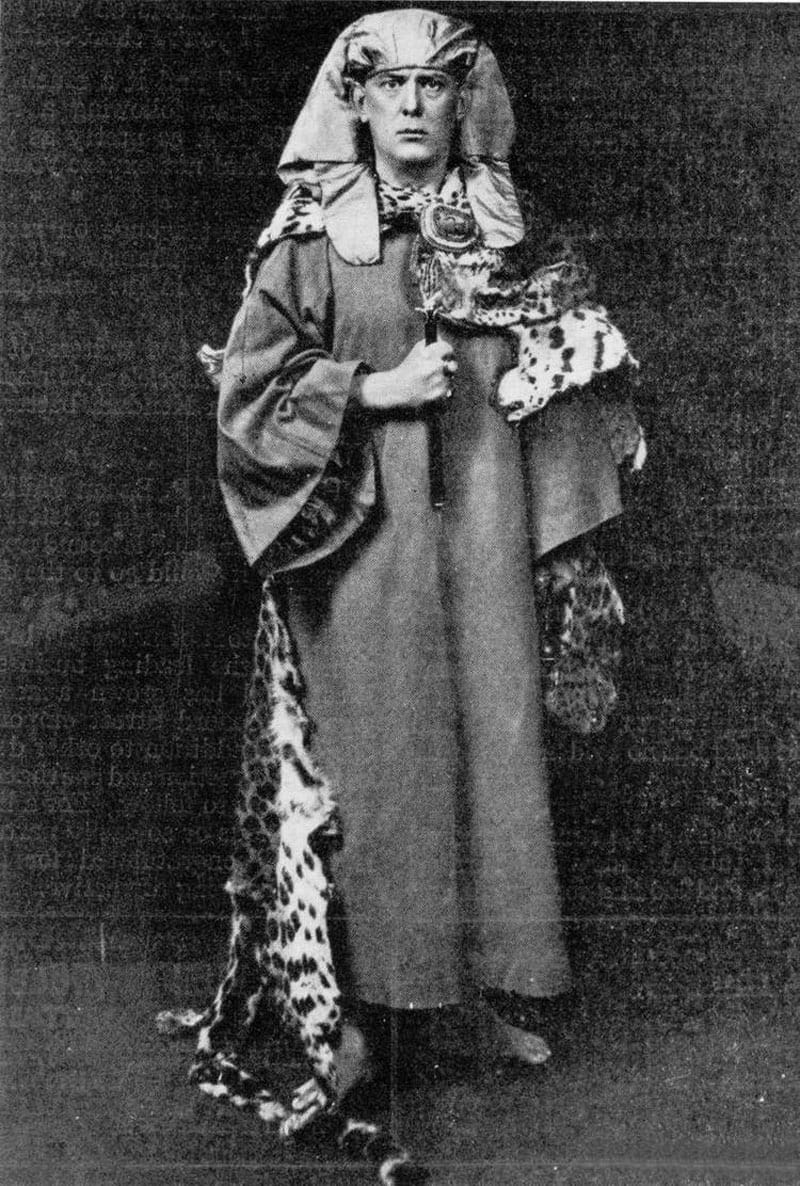
In December 1909, he travelled to the Algerian Desert near a place called Bou Saâda, a gateway to the Sahara - and its hellish conditions. Where better to open the gates of hell themselves? Crowley’s mission was to summon a demon called Choronzon. (This particular denizen of hell was popularised by Crowley as the demon of the abyss, though identified by the 16th century sorcerer John Dee). Instead of the 666, the number of the beast referred to by Stephen King and various movies, and which Crowley assigned himself, Choronzon was short-changed by Crowley’s own numbering system with 333.
By contemporary account (The vision and the voice by Crowley himself) Crowley successfully summoned Choronzon. The exact process is documented for any who give a damn (sorry) but unlike many of Crowley’s rituals, no-one had to, erm, drop trousers.
I’m aware that Crowley giving a blow-by-blow account of a ritual kinda defeats the secrecy argument but the point is made: that secrecy can add profundity to total nonsense.
But wouldn’t you like to know what Choronzon said when he rose (if I have the geography right) from hell? I’ll tell you in a minute.
Ancient magic, or perhaps we should call it natural science, was the stuff of witchcraft and witch doctors. The bark of a willow tree (the source of Salicin aka para-aspirin) can soothe the fevered brow. Moss, particularly sphagnum, can salve wounds. The witches may have gotten a little carried away when Christianity arrived but before that they and their druidic cousins ruled the roost. Once Christianity took hold, the natural sciences were inexplicable and thus unholy. Cue… the ducking-stool, the pyre etc. All for possessing some less obvious knowledge.
Much later, Crowley, in the fine tradition, summoned a demon.
And by the way, Choronzon said:
“Zazas, Zazas, Nasatanada, Zazas”.
Now you know.
You have your pentagram ready? Good. Sacrificed three pigeons? Nice. All together now. Zazas… Zazas…
Excommunicamus et anathematizamus eum
Now that may not sound nasty, but it amounted to telling someone to go to hell. It's a bit of a slow-burn punishment, not quite as bouncy and immediate as the death penalty prescribed for apostasy under Islamic law, but for a Catholic it was fearsome.
“We excommunicate and anathematise him.”
To which the assembled priests would reply, “Fiat, fiat, fiat.”
Perhaps the cardinals had insight into the rental car fleets in hell.
For two thousand-odd years, the Church, in one guise or another, has tried to keep the lid on heresy.
Heresy, for our purposes, is a belief in an un-institutionally agreed truth.
The Bible is an old collection of scriptures. Some date its earliest writings to just under a thousand years BC. The story is compelling and almost sequential across the Old Testament. It was not always that way. A lot of the ancient religious writings were a little fanciful, even for the Catholic Church. The wider biblical literature contains books with lurid titles like Bel and the Dragon. Now, you see why some of these writings were excluded from various biblical canons? Although, rather inconveniently for my argument, Bel and the Dragon remains in the Catholic Bible. Dammit.
But Crowley, of the previous chapter, drew much of his inspiration from an ancient book that was disowned even more emphatically in the Western Christian tradition: the Book of Enoch, whose story begins in the world before the Flood. The trouble with the record is that there were two books of Enoch. The first is the ancient original written over two thousand years ago and the other was conjured by Queen Elizabeth’s magician, John Dee. The second is the source of Crowley’s mystique but there is no reason why he would not have been familiar with the first.
The original Book of Enoch tells us in five books about angels, their transgressions and the forbidden knowledge they brought to humanity. Dee’s version introduces the occult.
From these and other sources, we have a rich lineage of angelic and demoniacal names, many of which seem to contain the letter Z for some reason. Azazel, Denzel Washington's foe in Fallen, Ziminiar, Pazuzu (The Exorcist), Choronzon (qv) and Zozo. Even Ghostbusters had Zuul and Gozer the Gozerian. And let's not forget Beelzebub, the Lord of the Flies himself.
No wonder the Roman Catholic hegemony was suspicious of that particular Pandora's box. The Book of Enoch presented some awkward theological questions.
According to Enoch, two hundred angels descended to Earth under a leader with another Z in his name, Semjaza. They married human women (erm, yes, there were no female angels in this account) and produced giants. Azazel taught us all about weaponry and forbidden arts. Other angels shared astrology and celestial secrets.
Humanity was thus corrupted by knowledge. It wasn't the red apple in fair Eve's hand at all, nor simply the snake, Lucifer’s doing.
You see the problem?
Over the centuries, hundreds, perhaps thousands, of heretics were excommunicated, persecuted and butchered for embracing alternative religious truths. The Cathars, the Manichaeans, et al. Some drew upon traditions related to Enoch, particularly the fallen angels, although it would be an exaggeration to say that the Cathars were persecuted for exclusively supporting that particular book.
The Bible itself still refers to Enoch (the original one) in the Epistle of Jude. This is still awkward.
The story of Priscillian is particularly poignant. He was a fourth-century bishop who wrote in defence of reading apocryphal books, arguing, among other things, that Jude's quotation of Enoch demonstrated that such writings could not simply be dismissed. He was subsequently executed in 385 AD after a prosecution involving accusations of magic and heresy. Not merely for defending Enoch, but you get the picture.
I wonder if the Catholic Church still has secrets.
It certainly tried to suppress the paedophile behaviour of some of its priests in North America. But what about ancient secrets?
Follow me into conjecture.
What would be WORTH hiding?
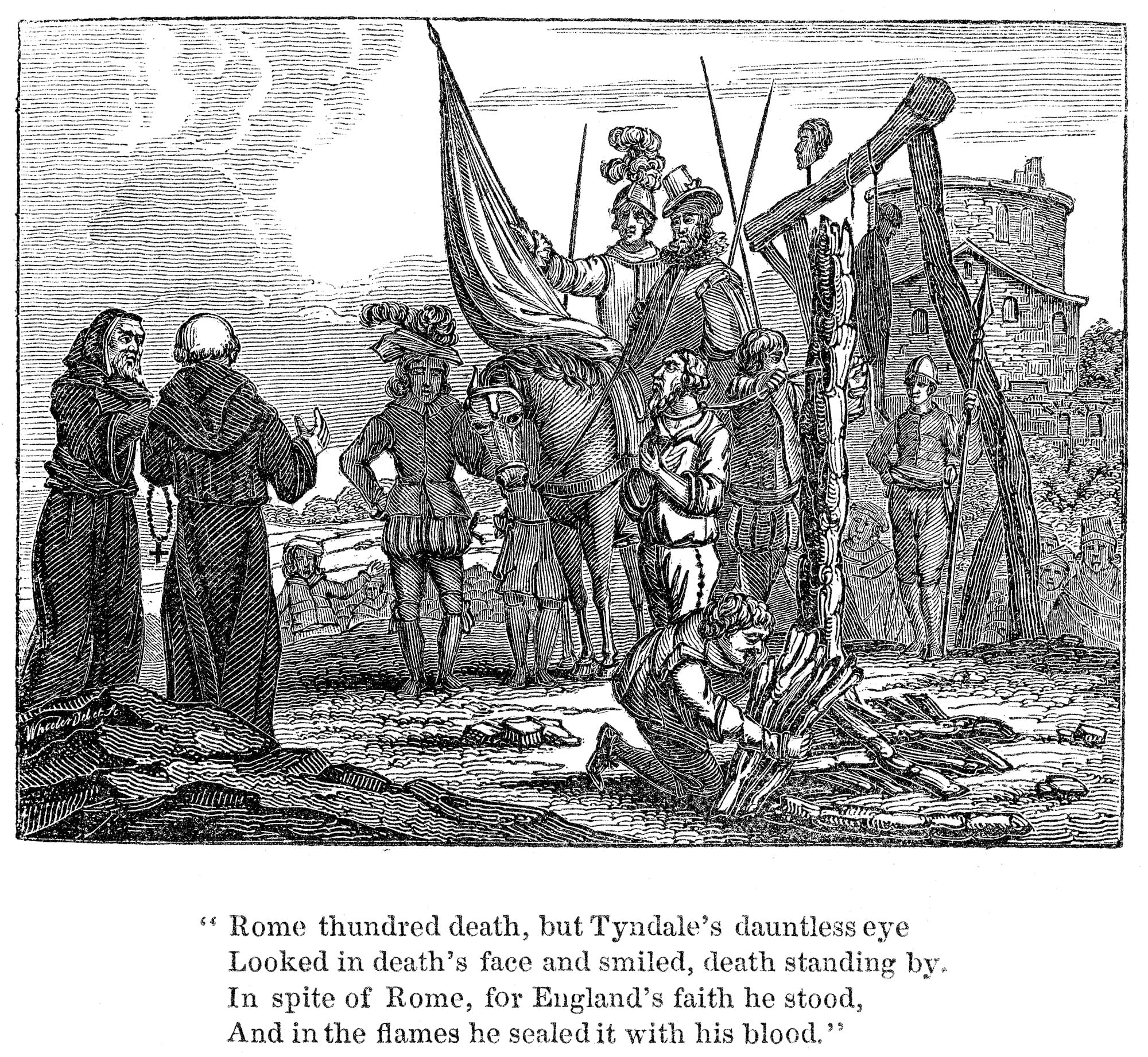
No one doubts that the Catholic Church has jealously guarded its authority over the interpretation of Christian truth. When that pioneer William Tyndale translated the bible into English and, God forbid, allowed common folk the ability to interpret the scripture’s themselves, he was burned to death. It is important for the Church that Jesus was a historical figure.
Christian institutions also played a predominant role in preserving and transmitting Christian historical writings for almost one and a half millennia. In writings such as these, there are two references to Jesus in the writings of a Jewish historian working towards the end of the first century AD: Flavius Josephus.
We possess no original manuscript. Like much ancient literature, his work survives through generations of copying and transmission. The oldest surviving Greek manuscripts containing the relevant passages date to around the eleventh century, although earlier writers quoted or discussed Josephus. There is no serious doubt about the existence of Josephus or the authenticity of his historical works as a whole.
In his Antiquities of the Jews, Josephus apparently refers twice to Jesus.
In the first passage, the language is suspiciously Christian-sounding. Almost as if it were… doctored?
And indeed, scholars have long suspected that Christian scribes altered at least part of it.
There is a second reference (I will paraphrase) in which Josephus mentions a James, presumably not another son of God but Joseph's offspring, whose brother was Jesus, “who was called Christ”. Much is made of this reference, and it is old.
A Christian writer called Origen, a couple of hundred years later, discussed Josephus and explicitly observed that Josephus did not believe Jesus was the Christ.
Can you imagine how irresistible it might have been to a Christian monk copying the original text to insert a few words? Imagine how smug he felt. “My lord Bishop, I found an error in the original. By the grace of our Lord, I was able to correct it!”
And now the conjecture.
What if, somewhere within the Vatican archives, there exists an original manuscript of Flavius Josephus?
What if Josephus never used the word 'Christ'?
What if he never mentioned Jesus at all?
Would THAT not be a secret worth keeping?
The expulsive pleasures of secular heresy
Heretics exist today, although their god is the oxymoronic notion of institutionally 'settled' science. They are still excommunicated, although now to a worldly hellscape of vitriol.
“How dare you… you have stolen my dreams and my childhood with your empty words… we are in the beginning of a mass extinction… for more than 30 years the science has been crystal clear.”
I.e. man-made climate change will kill us all within X years unless we deindustrialise. That is the Saint Greta Thunberg version, but the UN-sanctioned version is not far off, and its interpretation by panicking governments in the early twenty-first century came close.
Only a raving fool would deny that climate changes. It has been doing so for four and a half billion years. For it to stop would be divine intervention. The heresies come in two areas: the cause and what to do about it. Let's tackle these in reverse order because the punishments are lesser for pragmatism.
Scientist A takes the position that man is destroying the climate, but that we should cope first and pollute less second. To deny that we should all don sack cloth and ashes immediately is heresy.
The institution whose position is threatened is the political establishment. Much of the Western world has started down the economically brutal path of using less energy or using more expensive energy sources. Trillions in costs and lost growth have already been sunk into this pursuit. The money is spent… why turn around and lose focus now? To say otherwise is awkward.
But what of the extreme heresy? Scientist B says that Man is not responsible for the change; therefore, nothing we can do will impact the change. The real culprit is geological, solar, etc. I am not saying this is true, but can you imagine if it were?
Today it is all but impossible to gain funding for research that seeks to counter anthropogenic causes of climate change. Thus, we have a self-fulfilling truth. Good, you may say, less money for the crackpots.
But take a breath. Copernicus and Galileo were the scientific heretics of their day. Although Copernicus escaped punishment by inconveniently dying, Galileo was not so lucky. He was tried by the Roman Inquisition and sentenced to imprisonment for the rest of his life, albeit commuted to house arrest.
Galileo could point at each of his accusers. Today's scientific expulsion is lifelong, poisonous and anonymous.
If you don't believe that, ask John Clauser, a Nobel laureate, who dared to speak against the orthodoxy.
The secret here?
There is always a chance that the exceptionalists are right and the consensus is wrong, that is the only thing that is settled in theoretical science.
How Sweet It Is to Be Coddled to Death
The prevailing political wisdom is that the electorate is dumb and easily confused. Messages must be simple and unequivocal. Perhaps some electors are stupid, but does that mean everyone must be addressed at the level of the lowest common denominator?
You remember. “Stay indoors.” “Eat ten portions of grains a day.” “Give your child 72 vaccinations before they're eighteen.” “Ivermectin is a mere horse dewormer.” Or how about “Egg yolks will clog your arteries”?
And then there was “Duck and cover.”
Few will remember that last one. It was the wonderfully reassuring advice, with jaunty music, given to American schoolchildren during the Cold War. When a nuclear bomb explodes, get under your desk. Yes, of course, the desk might protect you from flying glass. But before the glass a thousand-degree heat wave might have upset you? On balance the best idea might be to go outside and enjoy the view. Well, let’s not to complicate the message.
Duck and Cover. Archer Productions for the Federal Civil Defense Administration, 1951. Source: Internet Archive.
I grew up believing white bread was really good for me. Hmm. My father grew up believing tobacco was really good for him. His father grew up believing laudanum was a tonic. Why was my indoctrination so boring? Times were better when the Coca leaf made more of a contribution than the Cola nut.

It is charitable to assume that all these instructions were issued with good intentions. But good intentions are not the same as good information. The American food pyramid, for example, was influenced by agricultural interests as well as nutritional science. Generations were given dietary instructions with a certainty that the evidence did not always justify. Did you know that if you eat just fat-free protein you will starve to death?
In the 19th century, Semmelweis wrote that men’s dirty hands were causing childbirth deaths. He was right. The medical community pilloried him. We had not learned our lessons 100 years later, when a 1972 UK newspaper article warning of the dangers of thalidomide was suppressed for years to restrain litigation. I wonder how many lost out on compensation because of this suppression.
We are still doing it. I have no intention of revisiting the ivermectin, zinc, vitamin D or remdesivir debates, or whether lockdowns were necessary and masks effective. Those arguments have been fought to exhaustion. My interest is in the manner of instruction. There could be no debate, no variance, no exceptions. Unless you were a politician, of course.
We, the people, were apparently too stupid to handle nuance.
There is not always a culprit in a knowledge crime. Sometimes the culprit is simply ignorance. Sometimes perfectly sincere people are confidently wrong. But there is a difference between not knowing something and deciding that other people needn't know it.
Take nicotine. Viciously addictive, certainly. But nicotine is not tobacco smoke, and the chemical has been investigated for potentially neuroprotective properties. The results are indicatively favourable. I’ll wager that comes as news to many people. A public-health warning has become so thoroughly associated with a substance that even discussing its possible benefits can sound like heresy.
Simplification is one form of coddling. Concealment is another.
Let's talk about suicide for a minute.
It is generally accepted that making detailed suicide instructions easily available may encourage vulnerable people to act upon an otherwise passing impulse. There is evidence supporting that concern, particularly around publicity given to specific methods. The intention behind restricting such information is understandable.
But the restriction raises another question. What happens to people who are determined to end their lives and, through ignorance, inflict appalling injuries upon themselves instead?
There are books, including The Peaceful Pill Handbook, that discuss methods of ending one's life. Their distribution has been restricted in some jurisdictions. The argument for restriction is that access may facilitate deaths that would otherwise never occur. The argument against is that concealment can deny information to people making decisions about their own lives, including those facing unbearable suffering. I have no intention of ever committing suicide but were I to fall terminally ill I would use easily bought diving equipment and a nitrogen canister. You see, I refuse to coddle. That is what it feels like.
I am not suggesting that the answer is simple. There are few subjects more emotionally charged, and this is perhaps the one passage in the essay where levity would be obscene.
But that is precisely why it belongs here.
Who decides whether knowledge is too dangerous to possess? And how do we account for the harms caused by withholding it?
Consider a related, rather more domestic example.
Monkshood. Aconite. Wolfsbane. An attractive flowering plant that might be growing in your garden. It is also organ-shreddingly poisonous. So are yew, foxgloves and oleander. And then there is Amanita virosa, the beautiful mushroom known as the destroying angel that smells aniseedy delicious.
They grow in gardens, woods and hedgerows. People encounter them without necessarily having the faintest idea what they are capable of doing.
Yet how much does the ordinary person know about poisons? We are understandably reluctant to publish instructions that might help someone commit murder or suicide. But knowledge of a danger is not the same as knowledge of how to exploit it.
A person who knows that aconite is poisonous may avoid a dreadful accident. A person who knows nothing about it may pick it, handle it carelessly or mistake it for something edible.
And here we encounter the peculiar contradiction at the heart of protective ignorance.
We restrict some information because knowledge might cause harm. Yet ignorance can cause harm too. The person who never learns the danger may be no safer than the person who learns too much.
There is another irony lurking among the mushrooms.
Almost everyone recognises Amanita muscaria, the fly agaric. Red cap, white spots, Santa Claus colouring. The very picture of a poisonous toadstool. Ask someone to draw a deadly mushroom and this is probably what you'll get.
Except it is remarkably difficult to die from eating one. It can make you spectacularly ill, certainly, but fatalities are exceptionally rare. In parts of the world it has traditionally been prepared and eaten, often after boiling or salt preservation to reduce its toxicity.
And then there is its rather more entertaining history about which I have written before.
The Fly Agaric mushroom has hallucinogenic properties. It must get very dull in the Arctic Circle because, according to Sámi folklore (think Lapland), someone discovered that drinking the urine of a reindeer that had consumed such mushrooms could make you trip balls while keeping your stomach inside your body.
We have managed to get even our poisonous mushrooms muddled up. As a result most UK denizens are terrified of foraged mushrooms because they are not taught the difference between fine and final.
With suicide, the stakes are immeasurably more terrible. Information might facilitate an irreversible decision. Its absence might contribute to a botched attempt and a lifetime of suffering. Neither possibility can simply be wished away.
The instinct to protect people is understandable. But protection becomes paternalism when those dispensing it assume that other adults cannot be trusted to understand the truth, weigh its consequences and exercise judgement.
And sometimes we are not even told that information has been withheld. We receive a simplified account, a reassuring instruction, a slogan or a prohibition, presented as though nothing worth knowing has been left out.
We are being coddled. To death.
We are treated like mushrooms
Nowhere is secrecy more protected than within government. There are good, valid reasons, national security perhaps. But I refuse to believe that preventing the embarrassment of the government in question is a good reason.
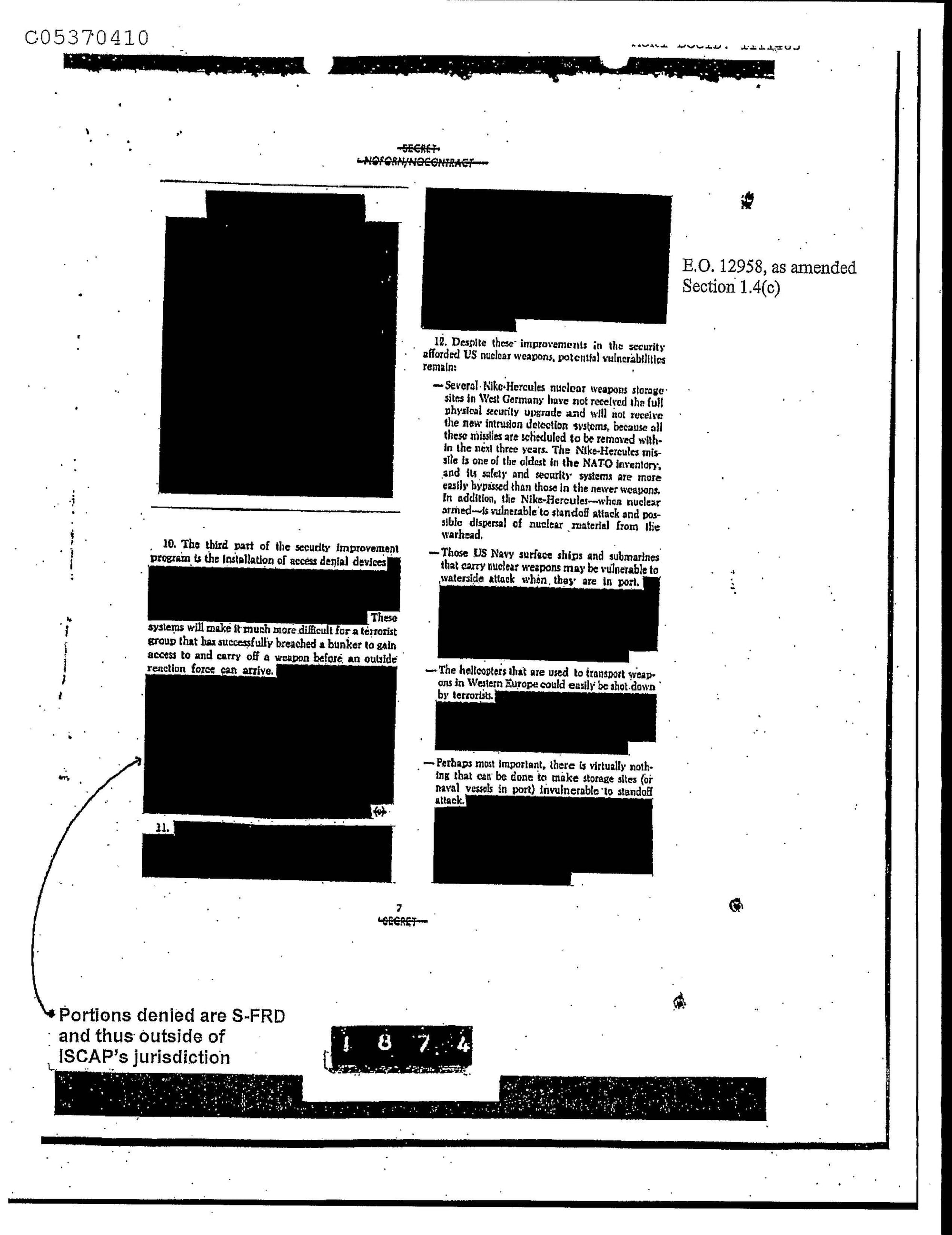
This subject alone has filled tomes so let’s just visit a few ribald extremities. Hunter Biden, a troubled man who also happened to be the son of the establishment-preferred presidential candidate, left a laptop with indecent images and evidence of corruption with a repairman. The FBI determined it was genuinely his and then the powers that be issued a fatwa on anyone declaring it was genuine.
How much have you heard, to this day, of JFK’s humping some ingenue in the Oval Office whilst the Secret Service barred the door… not at all? Hmm. The contemporary press knew.
There is a large triangular military craft that flies at extraordinary altitude that people think is a UFO. It is not. Can I say this with certainty? No, but look at this sentence again in thirty years’ time.
This secrecy breeds conspiracy theories and THAT is the problem. Some people believe that a secret cabal of rich Jewish (of course, they have to be Jewish) bankers steer the world economy behind the scenes. Others that the fabulously wealthy all have private underground cities to protect themselves when the aliens invade in 2027.
This is not healthy and it stems from government secrecy.
Let’s look at a specific example and drill down. We are not having enough babies to support the Western welfare state. This is an absolute truth and given time, the entire edifice of debt will collapse. The collapse may be slow or quick but it will be catastrophic.
There are three solutions. Have less of a welfare state (unacceptable to many), boost the birthrate and encourage inter-generational support (unacceptable in its cultural implementation) or encourage immigration to maintain a population level - and they must come from readily available sources, the developing world (unacceptable to many). You can see the problem. There is no sellable solution. The secrecy here is subtle. The demographic data is published, the financial predictions, facile. There is no debate. What is kept secret are the cultural consequences of the decisions that are being made for us as the politicians muddle through.
Instead of opening the debate we are kept in the dark and fed shit for breakfast.
And as a result we have the rise of extremism across Western society. Thank goodness our voting systems are robust.
To be erased
There are modern taboos and touchpoint topics. Race and gender are the most febrile zones. What happens when a writer causes offence? There is a career-ending pile-on. This is not the same as climate contrarians. An anti-anthropogenic climate change advocate is treading water in the raging seas of consensus science. Some modern taboos forbid the truth being discussed at all.
Let’s wade into the swamp, and I will do it in a manner to which I am unaccustomed. Delicately.
There is a difference in the average IQ of races. There, I said it. The data is sound, the causes are not settled.
People get upset because they do not understand the term “average”. Nothing about the analysis performed to date is predictive of an individual’s ability. No Asian can turn around to a white person and say, “Because Asians are smarter than white folks, I know you are dumber than me.” What they can say is, “It is more likely that you are dumber than me”, and therein is the anathema.
No one has unpicked the full causal chain of intelligence, but I wonder if society-level results are apparent. So instead of wading further into this swamp, let me leave you with this question. Is there a link between lower average IQ (for whatever reason) and lack of civilisational development? And may the Lord defend you if you try to prove a genetic IQ inheritance causation.
There has never been a time when knowledge did not confer power upon those who controlled it.
Except today, when vast libraries are available to every LLM user. Anyone can look up anything they want.
Except they can't.
Because you can't handle the truth.
(Thanks, Jack.)


Discussion